The return-to-office shift is reshaping pet care in Marin and beyond
If outside the area, please call your nearest emergency vet.
As return-to-office expectations take hold in 2026, pet owners are navigating a new reality where work structure directly shapes how, when, and how well they care for their animals. For many, the routines built during remote work are now under strain, raising questions about access to veterinary care, emergency readiness, and long-term pet well-being. Drawing on national survey data and localized insights from Marin County, this report explores how evolving workplace policies are redefining modern pet ownership.
Key takeaways
- Half of 2020-2022 pet adopters say remote work made it possible to get their animal.
- Over 1 in 5 pet owners would quit their job over a full return-to-office mandate, partly because of their pet.
- 39% of working pet owners have used PTO or sick leave to care for a sick pet, and 19% lied to their boss about the reason.
- 42% of pet owners report behavioral changes in their animals since spending more time away from home.
- Pet owners with 45-minute commutes are nearly five times more likely to struggle with vet visits than remote workers.
- 60% of fully remote workers say they would not feel confident handling a pet emergency if forced to commute full-time.
- 74% of remote workers say flexibility has directly helped them get faster vet care, vs. 45% of in-office workers.
- 44% of pet owners say employer-sponsored pet insurance would make them more loyal to their company.
- 49% of pet owners say their workplace does not take pet care as seriously as childcare.
- Only 42% of working pet owners have a reliable emergency plan for getting their pet to a vet during work hours.
A pandemic shift meets a new reality
The rise in pet ownership during the remote work era is now intersecting with changing workplace expectations.
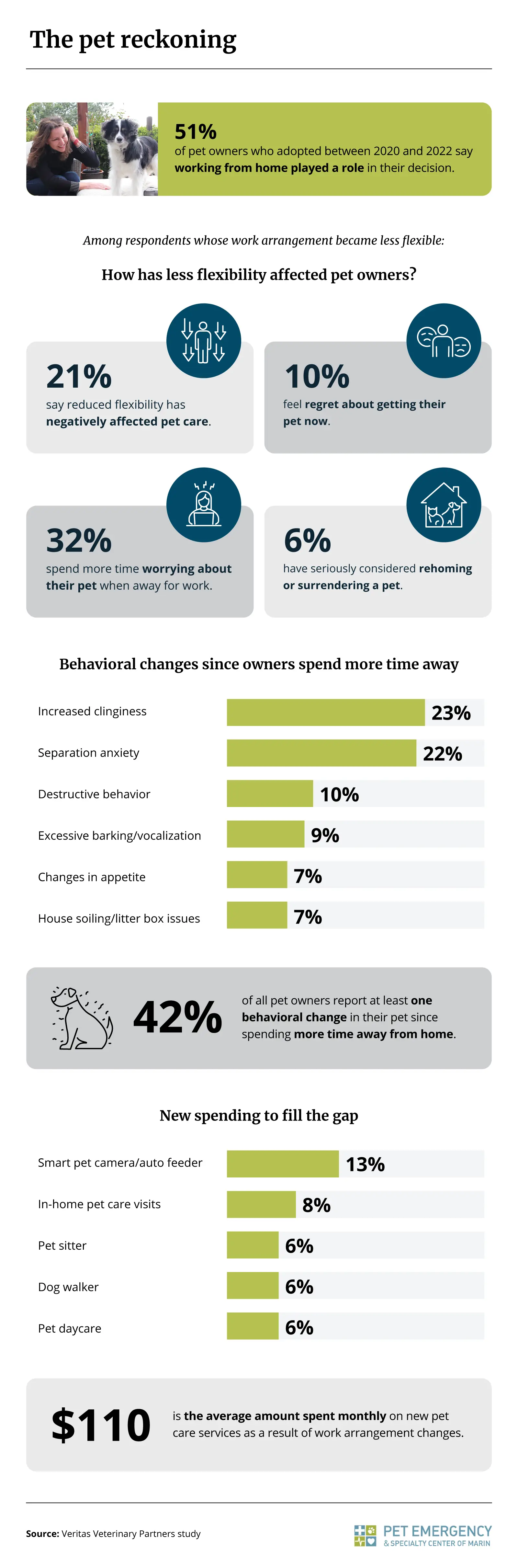
Fifty-seven percent of respondents adopted a pet between 2020 and 2022, with 51% of those adopters indicating that working from home played a role. For many, that flexibility was foundational; 24% described it as a major factor, while 27% viewed it as a contributing one.
As flexibility has decreased, the impact on pet care has become more visible. Twenty-one percent of pet owners reported that reduced flexibility has negatively affected their ability to care for their pet, with hybrid and in-office workers feeling this shift most acutely.
Behavioral changes in pets have followed. Forty-two percent of owners observed at least one change since spending more time away, most commonly increased clinginess (23%) and separation anxiety (22%). Among those who experienced reduced flexibility, 80% reported at least one behavioral change, underscoring the link between routine disruption and pet well-being.
In more difficult cases, the strain has led to reconsideration. Ten percent of respondents reported some level of regret about getting their pet, while 6% have seriously considered rehoming or surrendering due to changing work conditions.
When work decisions become pet decisions
Professional choices are increasingly shaped by the realities of pet care, influencing everything from job satisfaction to long-term career planning.
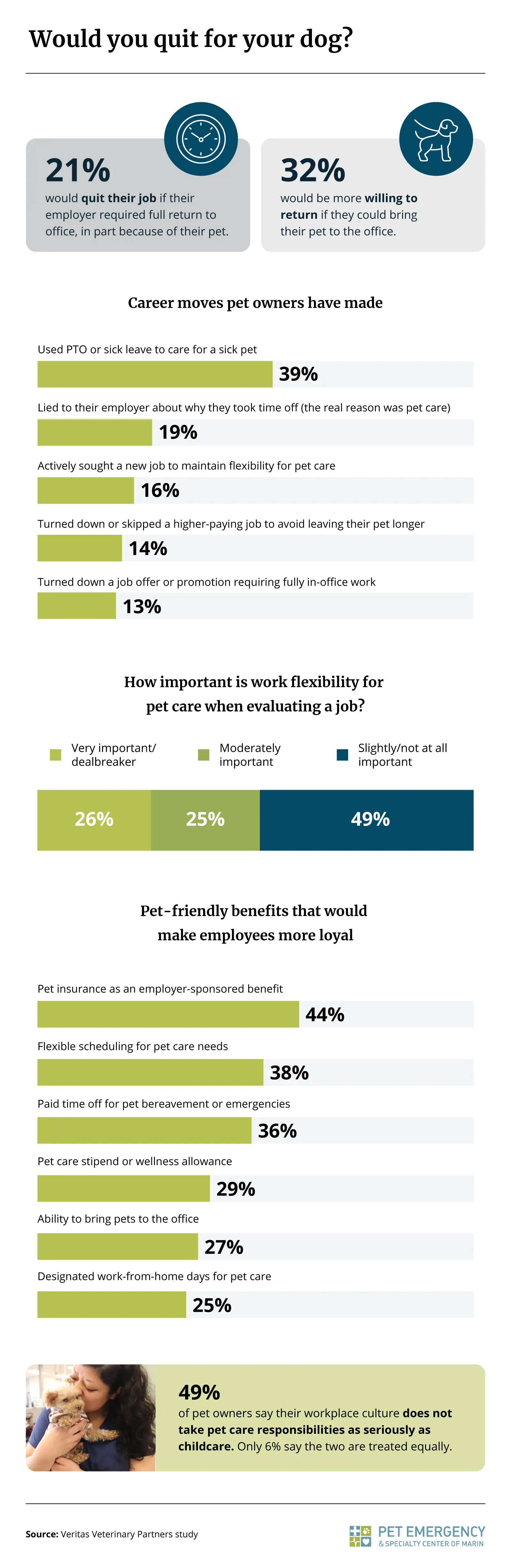
Twenty-one percent of pet owners indicated they would consider leaving their job if required to return to the office full-time, in part due to their pet. At the same time, 16% reported actively seeking new roles to preserve flexibility, and 14% have declined higher-paying opportunities to avoid extended time away from home.
Flexibility is now a defined factor in employment decisions. Twenty-six percent of respondents described work flexibility for pet care as very important or a dealbreaker, with fully remote workers most likely to hold this view. In parallel, 25% of remote workers reported turning down a job or promotion that required in-office work.
Daily workplace behaviors reflect this tension. Thirty-nine percent of pet owners have used PTO or sick leave to care for a pet, and 19% acknowledged misrepresenting the reason for their time off. Meanwhile, 49% believe their workplace does not take pet care as seriously as childcare, pointing to a gap between employee needs and employer policies.
At the same time, certain benefits stand out. Forty-four percent of respondents identified employer-sponsored pet insurance as the top factor that would increase loyalty, followed by flexible scheduling (38%) and pet bereavement leave (36%).
Veterinary access in a changing work environment
Work structure has a direct impact on how quickly and effectively pet owners can access veterinary care.
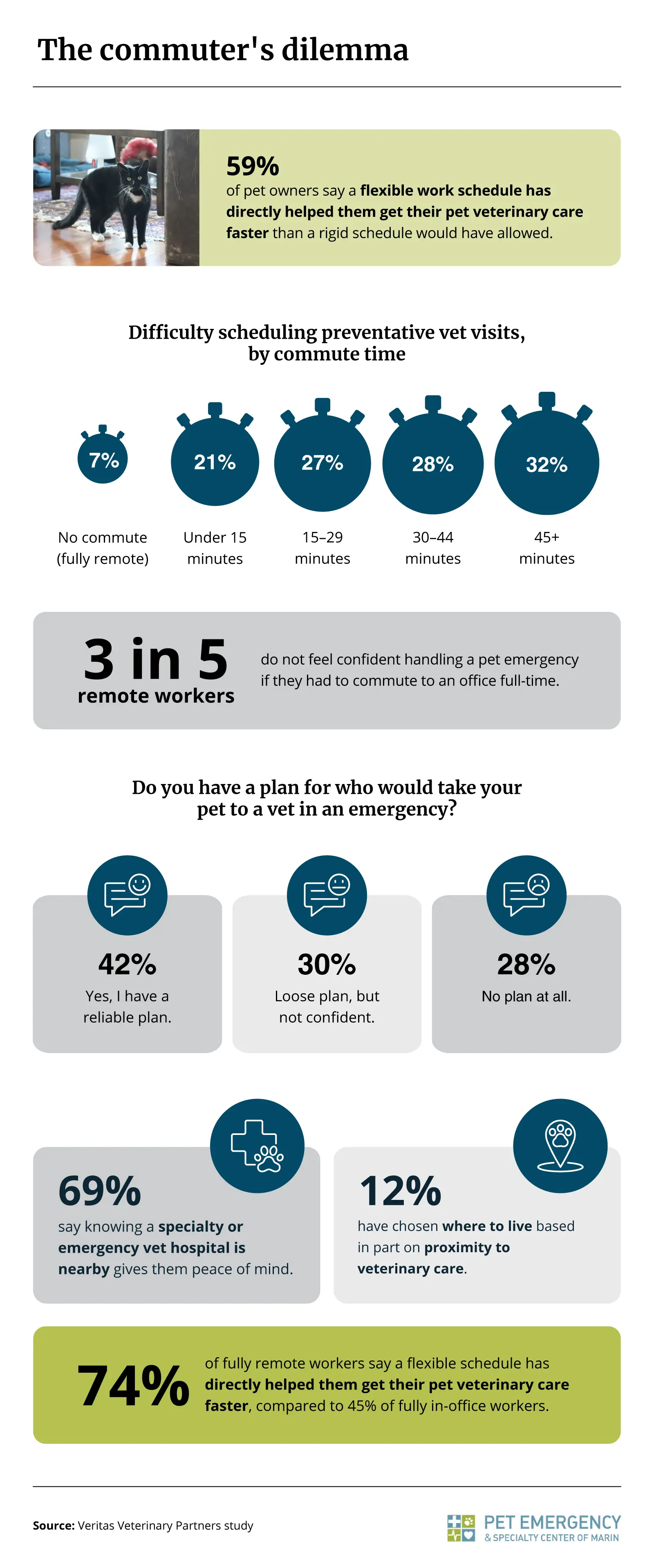
Fifty-nine percent of pet owners agreed that a flexible schedule has helped them obtain veterinary care more quickly. This effect was most pronounced among fully remote workers, with 74% reporting improved access, compared to 67% of hybrid workers and 45% of those working fully in-office.
Furthermore, commute times had a pronounced impact on pet owners’ abilities to schedule preventative pet visits. Those with 45-minute commutes, or longer, were nearly 5 times more likely to have trouble scheduling vet visits than remote workers.
At the same time, structural challenges remain. Twenty percent of respondents said their commute makes it difficult to manage their pet’s daily routine, and another 20% reported difficulty scheduling preventative veterinary visits.
Emergency preparedness also reflects this divide. Forty-one percent of pet owners indicated they would not feel confident handling a pet emergency if required to commute full-time. While 69% said proximity to a specialty or emergency veterinary hospital provides peace of mind, only 42% reported having a reliable emergency plan in place.
Local patterns in Marin County reflect both the advantages and pressures of a hybrid, commuter-driven lifestyle.
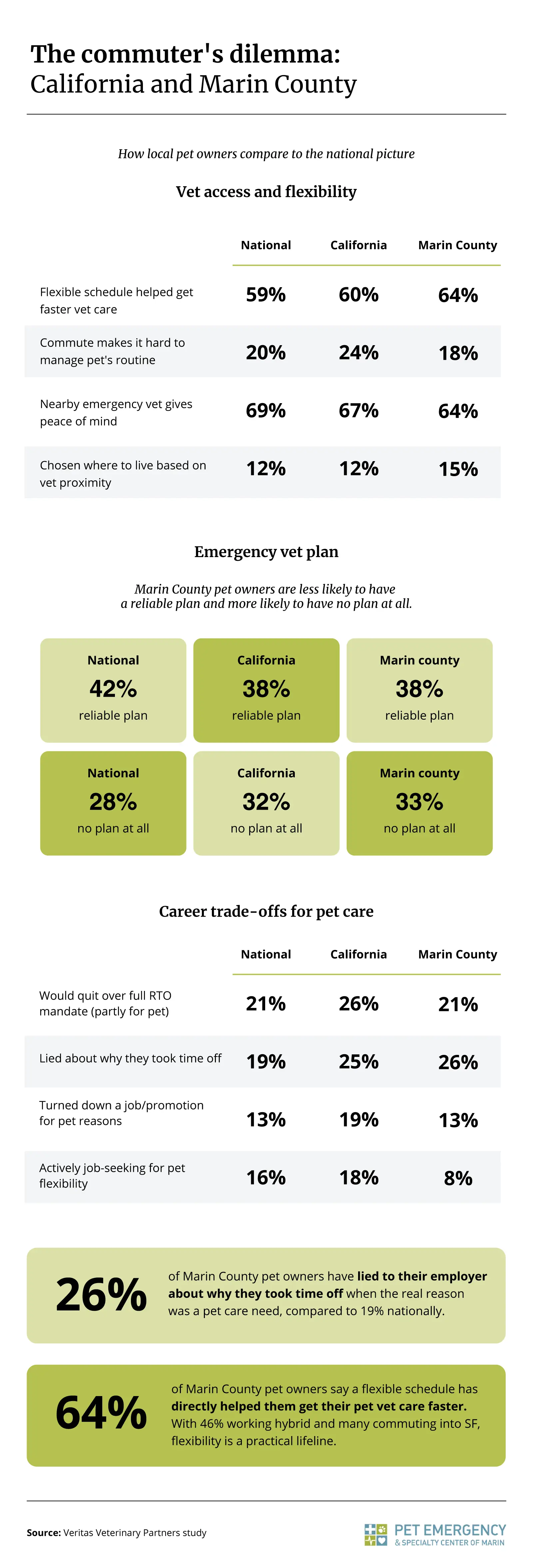
Sixty-four percent of Marin County pet owners reported that flexible schedules have helped them access veterinary care more quickly, slightly above both state and national averages. At the same time, commuting remains a meaningful factor, with 24% of California pet owners indicating it complicates daily pet care routines.
Emergency preparedness appears more variable at the local level. Only 38% of Marin County pet owners reported having a reliable emergency plan, while 33% indicated they have no plan at all. Both figures fall short of the national average, where 42% have a reliable plan and 28% have none.
Housing and lifestyle decisions also reflect the importance of veterinary access. Fifteen percent of Marin County pet owners reported choosing where to live based in part on proximity to veterinary care.
Workplace dynamics further illustrate the local context. Forty-six percent of Marin respondents reported working in hybrid roles, often commuting into San Francisco, while only 18% are fully remote. Within this structure, flexibility becomes a determining factor in how effectively pet owners can respond to both routine and urgent care needs.
A new standard for modern pet ownership
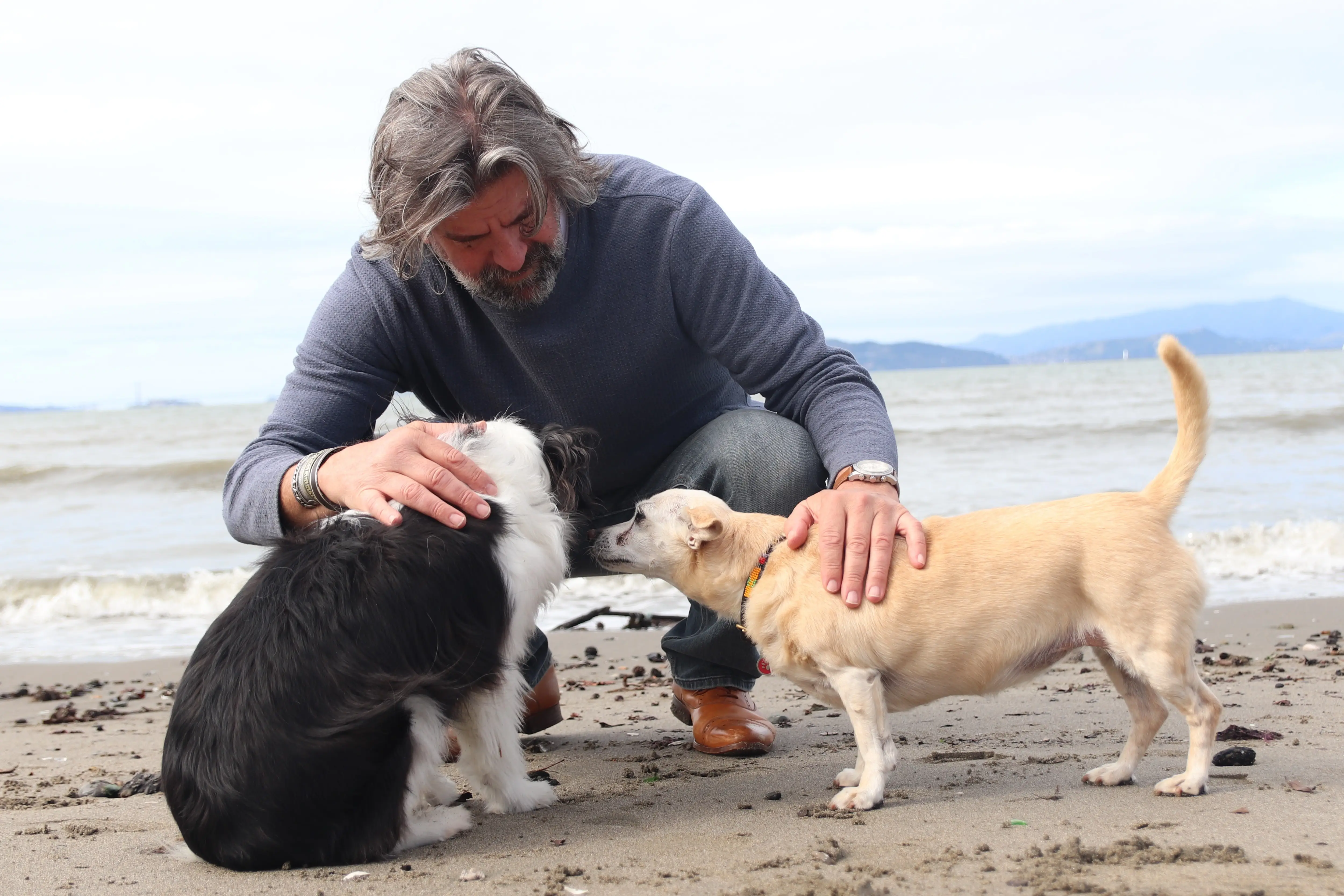
The relationship between work and pet care has become more interconnected than at any point in recent memory. What began as a period of expanded flexibility has evolved into a more complex landscape, where professional expectations and pet well-being must be carefully balanced.
The findings suggest that access to time, care, and support systems will define the next phase of pet ownership. As work environments continue to shift, the ability to respond to a pet’s needs, particularly in urgent moments, may become one of the most meaningful measures of flexibility.
Methodology
For this study, we surveyed 1,005 pet owners across the U.S. about their experiences caring for their pet based on their work environment. Among these pet owners, 146 were based in California, with 39 based in Marin County.
Among respondents, 59% reported as women, 40% reported as men, and 1% reported as non-binary. Generationally, 5% of respondents reported as baby boomers, 24% reported as Gen X, 54% reported as millennials, and 17% reported as Gen Z.
About PESCM
Pet Emergency & Specialty Center of Marin provides advanced emergency and specialty veterinary care for pets across the San Francisco Bay Area. With a team of board-certified specialists and experienced emergency clinicians, PESCM delivers thoughtful, high-level care designed to support pets through both urgent and complex medical needs.
Fair use statement
This content is intended for noncommercial use only. If shared or referenced, please include proper attribution and a link back to Pet Emergency & Specialty Center of Marin.
The information contained in the article is for informational purposes only and is not intended to take the place of the advice of a veterinarian.