
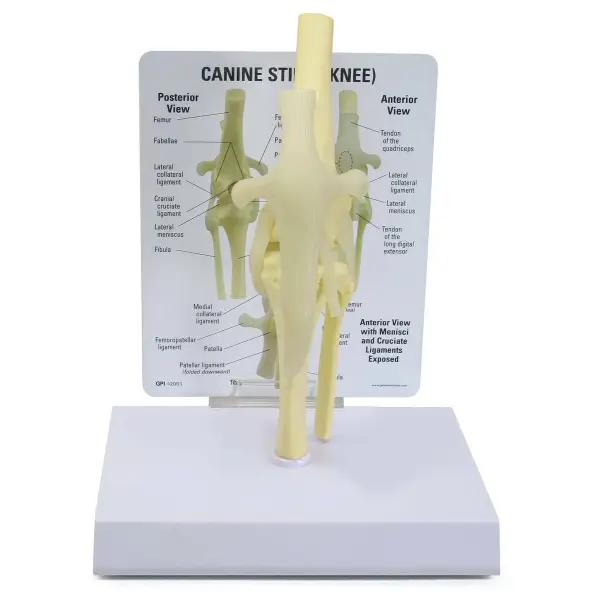
If your veterinarian showed you a knee model while discussing your dog's diagnosis, you're already one step ahead.
That same team puts their trust in us for TPLO surgery, and we're ready to pick up right where that conversation left off.
Not sure exactly what your vet found? That's okay. Schedule a consult with us, and we'll walk through the specifics together.
Signs your pet might be experiencing a knee injury:
As the Bay Area’s most comprehensive veterinary hospital, we provide world-class surgical expertise, rooted in local, compassionate care - right here in Marin.
We’ll work closely with you and your primary care veterinarian throughout your dog's treatment.
From your first questions to your dog's full recovery, our team is with you every step.
Board-certified veterinary surgeons
Dogs can return to a full, active life
Your primary care vet stays involved
All-inclusive pricing model
Financing available from CareCredit
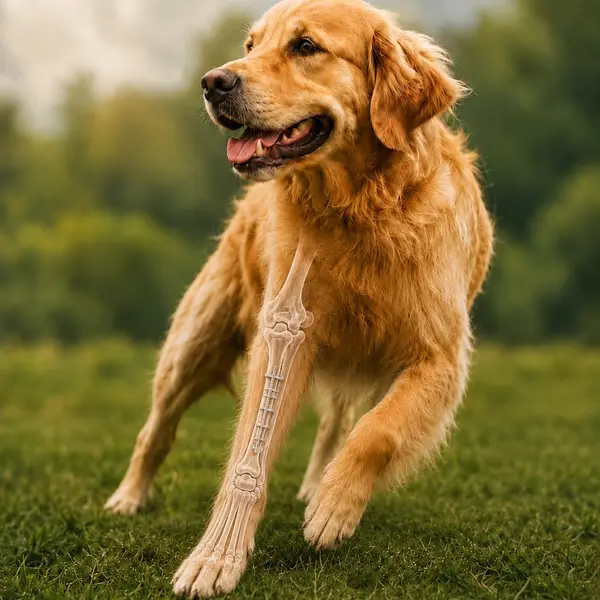
TPLO — tibial plateau leveling osteotomy — is the surgery most often recommended for a knee injury, especially in larger or more active dogs.
Rather than replacing the torn ligament, TPLO changes the mechanics of the knee itself: our surgeons carefully reshape and rotate the top of the shin bone (tibia), then stabilize it with a plate and screws for a perfectly working joint.


*Bilateral cases, complications, or advanced diagnostics may be quoted separately by the surgery team.
* Surgical consultation
* Pre-operative diagnostics
* TPLO procedure
* 8-week recheck

Cost doesn't have to delay the care your dog needs. Apply online in minutes, or ask our team for details.
Understand more about your pet’s condition and treatment options.
Before surgery, you and your dog will have a consultation with a board-certified veterinary surgeon, which includes a physical exam, discussion of the causes of a cruciate ligament tear, an explanation of options (TPLO vs. lateral suture vs.TightRope), a viewing of an animation of the TPLO procedure, and of course, answering any questions from you.
At the initial consultation, our staff will provide an estimate for pre-operation, the procedure, and post-operation, and also includes all exams, medications (not refills), post-op X-rays, and day-of-surgery bloodwork.
Your pet’s surgery is performed in a sterile, dedicated surgical environment by the same surgeon you meet with during your initial consult. Medications and anesthesia required by your pet during surgery are included, as well as anesthesia monitoring both during surgery and through recovery by a registered veterinary technician (RVT) who has extensive experience with anesthesia. Your dog’s leg will be bandaged and he or she will recover in a bed with supplemental heat.
Overnight hospitalization is required for most surgeries, although for TPLO, possibly two to three nights if bilateral, depending on whether the patient is able to walk with two bandages. You can rest easy knowing that your pet will be monitored 24/7 by a veterinarian and will receive necessary antibiotics and pain medication. Additionally, patients are offered a meal when they are alert and will be walked in the afternoon for elimination. While we don’t usually allow visitors due to patient anxiety, our veterinary technicians are happy to send photos as requested by pet parents.
The staff at VSS are available for you to call for updates on your pet any time during their stay with us, 24 hours a day, 7 days a week.
The surgery fee includes all the medications (antibiotic, anti-inflammatory, and pain) your pet needs to come home and be comfortable during their recovery. For TPLO patients, we often use long-acting regional anesthesia, which has greatly decreased the need for narcotics.
After your dog returns home, he or she will need to be confined to a small rest area for two weeks with limited walks only while on a leash. For two to six weeks, we recommend all patients go on short walks only while on a leash and continue confinement indoors when unattended. These types of measures at home will ensure a successful and speedy recovery.
Post-surgical appointments to check on the status of your pet are also included in the surgery package. Post-op follow-up appointments include bandage removal at three to five days, suture removal at two weeks, then post-op X-rays at six weeks. All of the above routine recheck appointments are included with the surgery.